
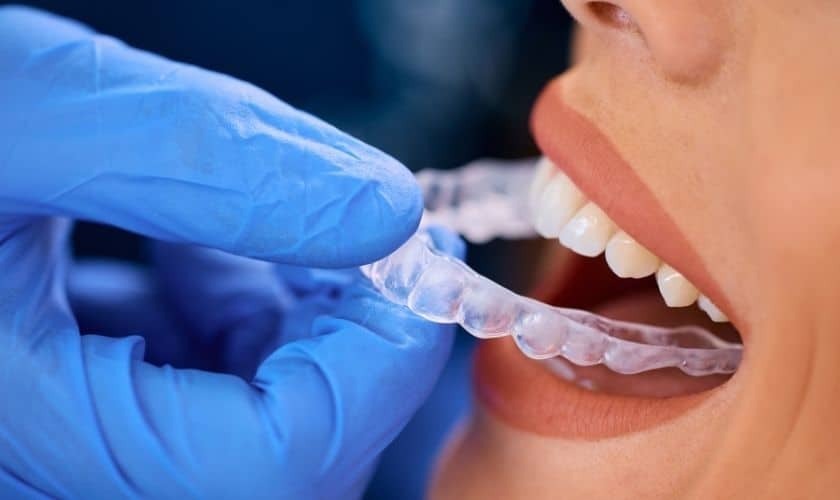
Can you get a cavity while straightening your teeth with transparent aligners? Yes, removable aligners make brushing and flossing easier than fixed orthodontic appliances, but they do not make teeth immune to decay. Plaque, frequent sugar exposure, poor brushing, and placing trays back over unclean teeth can still increase the risk of cavities.
At Dental Group of Lubbock, Dr. Natalie Haseloff and the dental team understand why finding decay during orthodontic care can feel frustrating. The reassuring part is that a cavity usually doesn’t mean your entire treatment has to stop. For patients receiving Invisalign in Lubbock, early diagnosis, appropriate restorative care, and checking the tray fit afterward can help protect both oral health and orthodontic progress.
Here is what you should know if tooth decay develops while you are wearing clear aligners.
Can You Get Cavities While Wearing Clear Aligners?
Yes, Invisalign moves teeth, but it does not prevent the biological process that causes cavities. Tooth decay develops when plaque bacteria metabolize sugars and other fermentable carbohydrates, producing acids. Those acids can gradually weaken tooth enamel.
Aligners are removable, which gives you direct access to your teeth for brushing and flossing. However, problems can develop when food debris, plaque, or sugary liquid remains on the teeth before trays go back in.
Common cavity risk factors during treatment include:
- Frequent snacking throughout the day
- Drinking sugary or acidic beverages with trays in
- Inadequate brushing along the gumline
- Skipping daily flossing
- Replacing trays immediately after eating without cleaning the teeth
- Dry mouth or reduced saliva flow
- Missing routine dental exams and professional cleanings
A clear tray can hold liquid and residue close to the tooth surface. That is why daily oral hygiene with aligners matters throughout treatment.
How Can You Tell If You Have a Cavity During Treatment?
A cavity may cause sensitivity, discomfort, or a visible change in a tooth. However, early tooth decay can develop without obvious symptoms. A dental examination may detect a problem before you can feel it.
Possible warning signs include:
- Sensitivity to cold, heat, or sweets
- Pain when biting or chewing
- A new dark or discolored area
- A rough spot or small opening in a tooth
- Food repeatedly becoming trapped between certain teeth
- Persistent discomfort after removing your trays
Do not assume that every sensitive tooth has a cavity. Orthodontic tooth movement can create temporary pressure or tenderness, especially after switching to a new set of trays.
A dentist can distinguish normal movement-related sensitivity from decay, a cracked tooth, gum irritation, or another dental condition.
What Should You Do If You Find a Cavity During Invisalign Treatment?
Schedule a dental examination rather than waiting until orthodontic treatment ends. Small areas of decay are generally easier to manage before they become larger and involve deeper tooth structure.
1. Have the Tooth Properly Examined
Your dentist first needs to determine whether decay is present and how far it extends. A clinical examination and dental X-rays, when indicated, can help evaluate areas that are difficult to see directly.
2. Tell Your Dentist About Your Orthodontic Treatment
Bring your current aligners to the appointment. Your dentist needs to know which tray you are wearing and whether the affected tooth has an attachment.
3. Treat Active Decay When Recommended
If the cavity requires a dental filling, the decayed portion of the tooth can often be removed and restored without abandoning your orthodontic plan.
If you have noticed sensitivity, a dark spot, or discomfort while wearing Invisalign, you can contact us for an evaluation rather than waiting for your next scheduled orthodontic visit.
Will a Dental Filling Affect the Fit of Your Aligners?
A small filling may have little or no effect on tray fit, but the fit should always be checked after treatment. A restoration changes part of the tooth’s surface. The amount and location of that change determine whether your existing tray continues to seat correctly.
A common clinical scenario involves a patient who needs a small filling on a back tooth during orthodontic treatment. After restoring the tooth, the dentist can place the current tray over it and check whether it seats fully.
If the tray feels unusually tight, rocks, lifts away from the tooth, or no longer reaches its normal position, do not force it into place.
Larger restorations can require additional planning. A dental crown, major reconstruction, or other treatment that significantly changes tooth shape may affect how an existing tray fits. In some situations, updated digital scans or revised trays may be necessary.
Do You Have to Stop Invisalign While a Cavity Is Treated?
Not necessarily; many routine cavities can be treated without permanently interrupting orthodontic care. The exact approach depends on the cavity’s size, location, the required restoration, and the fit of the trays afterward.
Your dentist may need to coordinate care when:
- Decay is close to an orthodontic attachment
- The tooth needs extensive restoration
- A crown may be necessary
- Decay has reached the dental pulp
- The tooth requires root canal therapy
- The existing tray no longer seats correctly after treatment
This coordination matters because restorative dentistry changes tooth structure, while clear-aligner therapy depends on precise contact between the tray and the teeth.
Avoid deciding on your own to stop wearing trays for several days. Changes in wear time can affect planned tooth movement. Ask your dental provider how to manage tray wear around the procedure.
Can You Wait Until Orthodontic Treatment Is Finished to Fix the Cavity?
Active decay should not simply be ignored until orthodontic treatment ends. Cavities do not repair themselves once decay has progressed into a true opening in the tooth.
A small lesion may require a relatively conservative restoration. If decay progresses deeper, more tooth structure may become involved. In advanced cases, treatment can become more complex.
This is an important distinction for patients undergoing Invisalign treatment. Keeping teeth straight is only one part of oral health. Protecting enamel, gums, and tooth structure remains essential throughout orthodontic care.
The right timing depends on the diagnosis. Your dentist can determine whether an early enamel change can be monitored or whether a filling is appropriate now.
How Can You Lower Your Cavity Risk While Wearing Aligners?
Cavity prevention becomes much easier when you build cleaning into your tray routine.
Follow these practical habits:
- Remove trays before eating. Do not chew food while wearing them.
- Choose water while trays are in. Sugary and acidic drinks can expose teeth to substances that contribute to enamel damage.
- Brush before reinserting your trays when practical. This reduces food and plaque trapped against tooth surfaces.
- Floss every day. A toothbrush cannot fully clean tight spaces between teeth.
- Clean your trays regularly. Follow the cleaning instructions provided by your dental professional.
- Attend routine dental checkups. These visits allow early signs of decay and gum problems to be identified.
- Pay attention to dry mouth. Saliva helps wash away food particles and neutralize acids.
These habits support both clear aligner treatment and long-term cavity prevention.
What Happens After the Cavity Has Been Filled?
After a filling, the next step is confirming that your current tray still fits correctly. The aligner should seat fully without unusual gaps, rocking, or excessive pressure around the restored tooth.
Your dentist may ask you to place the tray before leaving the office. This simple check can identify a fit issue immediately.
If the restoration changes the tooth’s shape enough to interfere with treatment, your dental team can determine the appropriate next step. That may involve a minor adjustment, coordination with the clinician managing your orthodontics, or a new digital scan.
Continue Your Orthodontic Care Without Ignoring Tooth Decay
Finding a cavity during orthodontic treatment can be inconvenient, but it does not automatically mean you have to abandon your plan for straighter teeth. The priority is to diagnose the problem early, restore the tooth when needed, and confirm that your trays continue to fit as intended.
At Dental Group of Lubbock, Dr. Natalie Haseloff and the dental team provide restorative care, including tooth-colored fillings, as well as ongoing dental services. If you develop sensitivity, pain, or any other concerns while wearing Invisalign in Lubbock, visit our dental office for a professional evaluation.
Call us at +18068553942 to schedule an appointment today so your cavity and orthodontic needs can be assessed together. Treating decay at the appropriate time can help protect the tooth while keeping your broader dental care moving forward.
Frequently Asked Questions
Can a dentist fill a cavity while I am wearing clear aligners?
Yes, many cavities can be restored while you are undergoing clear-aligner therapy. Bring your current trays to the filling appointment so the dentist can check their fit after the restoration is completed. If the filling changes the tooth’s shape, the dentist can determine whether an adjustment or an updated orthodontic scan is needed before you continue treatment.
Should I bring my aligners to a cavity-filling appointment?
Yes. Bringing your current trays allows the dentist to check whether they still seat fully over the restored tooth. This is especially useful when the filling affects a surface that contacts the tray. If the aligner suddenly feels tight, lifts away from a tooth, or rocks after your filling, ask the dental office to evaluate it.
What happens if my aligner does not fit after a filling?
Do not force a tray that no longer seats correctly. A dentist should examine the restored tooth and the aligner first. Sometimes a small adjustment may solve the problem. If the tooth’s shape changed substantially, your orthodontic treatment plan may need reassessment or a new scan. Contact the dental office promptly for guidance.
Can wearing clear aligners make cavities worse?
The trays themselves do not cause cavities. However, repeatedly placing them over teeth covered with plaque, food residue, or sugary liquid can create unfavorable conditions around the enamel. Remove trays for meals, clean your teeth regularly, floss daily, and keep routine dental appointments. Ask your dental team for help if you notice persistent sensitivity or enamel changes.
Can a cavity interfere with tooth movement during orthodontic treatment?
A small cavity may not directly prevent planned tooth movement, but untreated decay can complicate dental care as it progresses. A larger restoration may also change the shape of the tooth that the tray was designed to fit. Have any suspected decay examined promptly so your dentist can protect the tooth and coordinate restorative and orthodontic care as needed.